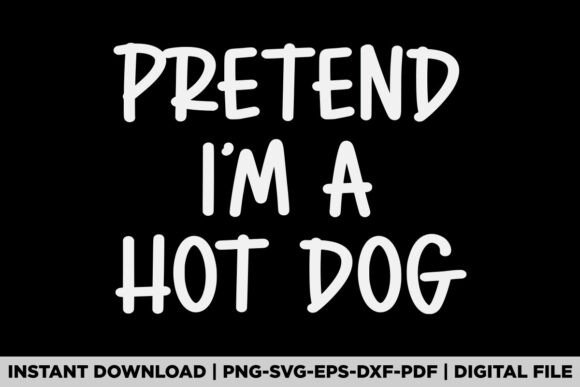
Pretend I'm a Hot Dog Graphics for T-Shirt Designs
As a designer working on real client projects, I always look for creative design assets that can elevate a visual concept without overpowering it. The Pretend I m a Hot Dog design caught my attention as a unique and playful graphic that could work well in specific contexts. It’s not the kind of asset that fits every project, but when used correctly, it adds a fun and unexpected touch that can resonate with the right audience.
First Impressions: A Playful and Whimsical Visual
The Pretend I m a Hot Dog design immediately communicates a sense of humor and lightheartedness. Its bold, illustrated style feels like a modern take on retro clipart, with a clean and recognizable shape that’s easy to identify. The visual is simple but effective, making it ideal for projects that want to convey a casual, friendly vibe. This makes it particularly suitable for small businesses, handmade brands, or seasonal campaigns looking to stand out with something unexpected.
When considering graphic design assets, this one offers a strong visual identity that doesn’t require much additional styling. It’s a printable design that can be adapted for various formats, from t-shirt designs to social media graphics. The style is versatile enough to work in multiple commercial design applications, but it also has limitations that designers should be aware of before using it in a professional setting.
Real-World Applications: Where It Shines
In practical design scenarios, the Pretend I m a Hot Dog works best in large layout areas, such as hero graphics, product mockups, or decorative accents. It’s an excellent choice for packaging design or product labels where a whimsical element can add personality. For example, a small business selling novelty items might use this design to create a cohesive theme across their Etsy product listings or print-on-demand offerings.
This design also excels in social media graphics, especially for platforms like Instagram or Pinterest where eye-catching visuals are key. It can be used as a Canva template or Cricut project to create custom stickers, wall art, or promotional materials. In these cases, the design’s simplicity allows it to be easily scaled and adapted without losing its impact.
For t-shirt design projects, the Pretend I m a Hot Dog could be a fun addition to a themed collection, especially for events or seasonal campaigns. It’s also useful for sticker design or sublimation design where a bold, illustrated image can make a statement.
Where to Use It Carefully
While the Pretend I m a Hot Dog design has its strengths, it’s not a universal solution. It may not work well in minimalist branding, professional corporate materials, or projects that require strict visual hierarchy. In crowded layouts or low-contrast backgrounds, the design can become lost or unbalanced.
It’s also important to test the design at different sizes. At smaller scales, the details may not hold up as well, and in some cases, the illustration could appear too simplistic or unclear. When used in brand identity or logo design projects, it’s better to pair it with more structured typography or complementary elements to maintain a polished look.
Designers should also consider how the Pretend I m a Hot Dog interacts with other visual elements. If the overall design is too busy, this asset might feel out of place. It’s best suited for projects that embrace a playful or informal tone rather than a serious or formal one.
Design Considerations: What to Check Before Using
Before incorporating the Pretend I m a Hot Dog into a client project, there are several practical steps to take. First, test it in black and white to see how it holds up without color. Then, check contrast on both light and dark backgrounds to ensure visibility and readability.
Preview the design at various sizes to confirm that it remains clear and impactful. Place it on real mockups—such as t-shirts, mugs, or tote bags—to get a sense of how it will look in physical form. Also, review file formats, especially if the design includes SVG design or PNG design files. Ensure that transparency is properly handled and that the vector elements are editable if needed.
Compare the design with different font styles, including serif, sans serif, script, and handwritten fonts, to see how it pairs visually. Finally, always confirm the commercial license to ensure it’s suitable for use in client projects or commercial applications.
Why It Matters: Emotional Appeal and Brand Connection
One of the key benefits of the Pretend I m a Hot Dog design is its ability to evoke emotion. It brings a sense of fun and nostalgia that can help build a connection with the target audience. This makes it a valuable tool for handmade business owners or small business branding efforts looking to create a memorable identity.
However, emotional appeal must be balanced with professionalism. If the design is used in a context where it doesn’t fit, it could undermine the brand’s message. That’s why it’s crucial to understand the project’s goals and audience before deciding to use this asset.
In the right scenario, the Pretend I m a Hot Dog can enhance a design by adding a unique visual element that stands out. It’s a great example of how a creative design can support a brand’s voice while still maintaining clarity and effectiveness.